Among the available options for short-form entertainment, YouTube Shorts stands out thanks to it being built upon YouTube’s massive existing ecosystem, making it a top choice for creators and brands. But how does YouTube Shorts algorithm work? In this article, MKT Softwarewill answer this lingering question, as well as provide tips to help your content perform better.
Understanding the basics of YouTube Shorts algorithm
YouTube Shorts algorithm is a personalized recommendation system that distributes videos based on its understanding of the users’ preferences and likings. The algorithm studies these preferences via analyzing the viewers’ watch habits, with the end goal being to continuously keep them engaged and thus, remain on the platform.YouTube Shorts algorithm in 2026 is prioritizing the following:
Content consistency.
Number of rewatches.
Engagement signals.
Viewer retention rate.
Understanding the basics of YouTube Shorts algorithm
How does YouTube Shorts algorithm work?
At its core, the YouTube Shorts algorithm is designed to match the right Short with the right viewer at the right moment. Unlike long-form YouTube videos, Shorts rely far less on subscribers and far more on real-time viewer behavior.Further details on how how YouTube shorts algorithm works include:
Audience-oriented
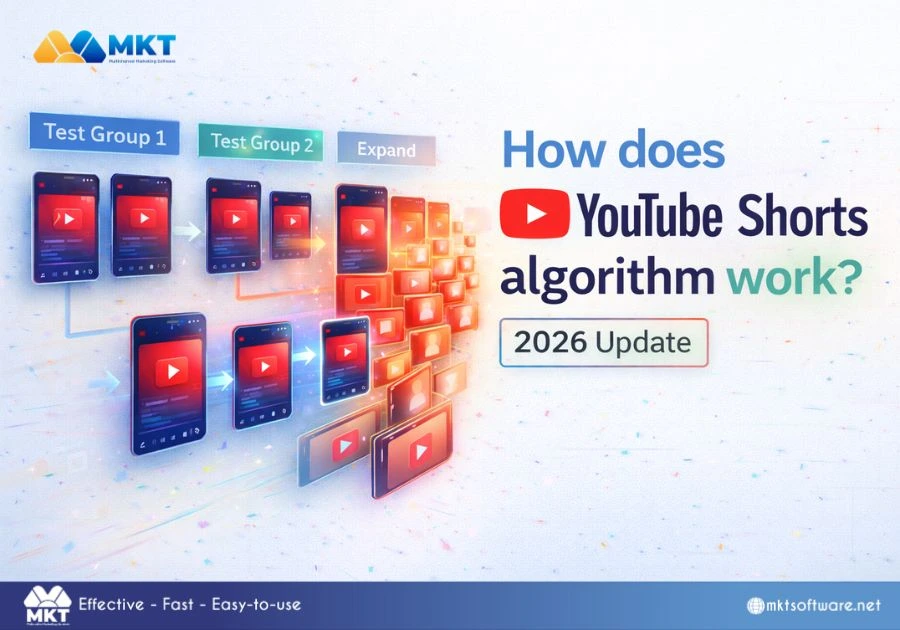
One of the biggest differences between Shorts and traditional YouTube videos is how content is evaluated. When you upload a Short, YouTube does not initially push it to your subscribers. Instead, the algorithm shows your Short to small test audiences who are likely to be interested in that type of content.If those viewers respond positively, YouTube will expand the distribution to a larger audience. This testing process can repeat multiple times, allowing a Short to slowly gain momentum if the responses to it are mostly positive.
Interest-based
The Shorts feed is not chronological, instead it is interest-based. YouTube builds detailed viewer profiles based on:
Watch history.
Topics engaged with.
Time spent watching similar Shorts.
Interaction behaviors.
Your Short is then delivered to viewers whose behavior suggests they might enjoy it. This is why small or new channels can still go viral as to YouTube Shorts algorithm, the content performance matters more than channel size.
Performance is measured in seconds
Unlike long videos where watch time is measured in minutes, Shorts performance is measured in seconds and percentages. The YouTube Shorts algorithm will look at:
How quickly viewers swipe away.
Whether they watch to the end.
Whether they rewatch the Short.
How the Short performs compared to similar Shorts.
How does YouTube Shorts algorithm work
Factors that affect YouTube Shorts distribution
Understanding the ranking factors behind Shorts distribution is essential if you seek consistent growth. Below are every factors that can influence YouTube Shorts algorithm as of 2026:
Watch time and completion rate
Watch time remains the most important factor in Shorts distribution. The algorithm closely tracks how long viewers watch a Short and whether they stay until the end. Shorts with high completion rates signal strong viewer interest, making YouTube more likely to push them to larger audiences.Meanwhile, Shorts with low completion rate may suggest the opposite, as such YouTube will restrain distributing further until newer data signals otherwise.
Users’ watch history
YouTube uses each viewer’s watch history to personalize the Shorts feed. Your Short is more likely to be shown to users who have previously watched or engaged with similar content. As such, creating Shorts with consistent topics and formats can help the algorithm easily understand your contents, and can match them with the right audience more effectively.How does YouTube Shorts algorithm work – Watch history
Similarity between Shorts
The algorithm compares your Short with other videos of similar topics, formats, and audiences. If it performs better than similar Shorts in terms of retention or engagement, YouTube will increase its distribution. This factor plays a key role in determining whether a Short’s reach can continue to increase.
Users’ engagement
Engagement signals such as likes, comments, shares, or saves help reinforce a Short’s relevance. While engagement alone cannot compensate for poor watch time, it acts as an amplifier for Shorts that already perform well in retention, helping them reach broader audiences.
Retention rate
Retention is the most important metric for YouTube Shorts. As their durations are short by nature, YouTube wants to see:
High percentage of the video watched
Minimal drop-off in the first 1–2 seconds
Strong completion rates (ideally 80–100%)
A 15-second Short watched fully will often outperform a 60-second Short that viewers abandon halfway.How does YouTube Shorts algorithm work – Retention rate
Tips to work with YouTube Shorts algorithm
Understanding how YouTube Shorts algorithm works is one thing, to fully master and utilize it so your videos can reach broader audiences is an entirely different matter. Below are some recommendations that you can use to optimize your contents to YouTube Shorts algorithm’s standards:
Utilize SEO for your Shorts
Although YouTube Shorts are short-form videos, SEO still plays a meaningful role in discoverability. Using relevant keywords in your video title, description, and hashtags can help YouTube understand the context of your content and match it with appropriate audiences. Clear, descriptive metadata also improves the algorithm’s ability to categorize your Short and surface it to users who have expressed interest in similar topics.
Utilize trending Shorts contents
Existing trending Shorts can provide valuable opportunities to increase visibility, as they already proved that the algorithm considered these contents to align well with viewers’ preferences. However, successful use of trends requires adaptation rather than imitation. Shorts that incorporate trending elements while remaining relevant to your niche tend to perform better than generic trend-based content, as they attract both trend-driven viewers and your target audience.
Leave an early impression from the first few seconds
The first few seconds of a Short are critical to its performance. YouTube closely monitors early viewer behavior, including swipe-away rates, to assess relevance. As such, it is important for creators to ensure they can capture users’ attention from the first few seconds.Shorts that immediately capture attention are more likely to retain viewers and pass the algorithm’s initial testing phase. Delayed introductions or slow pacing can significantly reduce distribution potential.Some methods to achieve this include:
Using intriguing CTAs right at the start.
Using compelling visuals and vibrant audios.
Placing the main hook of the Shorts at the beginning.
How does YouTube Shorts algorithm work – Leave an early impression
Keep the duration short with fast tempo
Shorter videos with a clear focus often achieve higher completion rates, which are strongly favored by the algorithm. Maintaining a fast tempo ensures continuous viewer engagement and minimizes mind-wandering. Every second of the Short should contribute directly to the core message or experience, increasing the likelihood of full views and repeat watches.You may be interested in: What is the best program to increase YouTube views? 5 effective optionsFor more knowledge-sharing posts, please visit our YouTube channel.